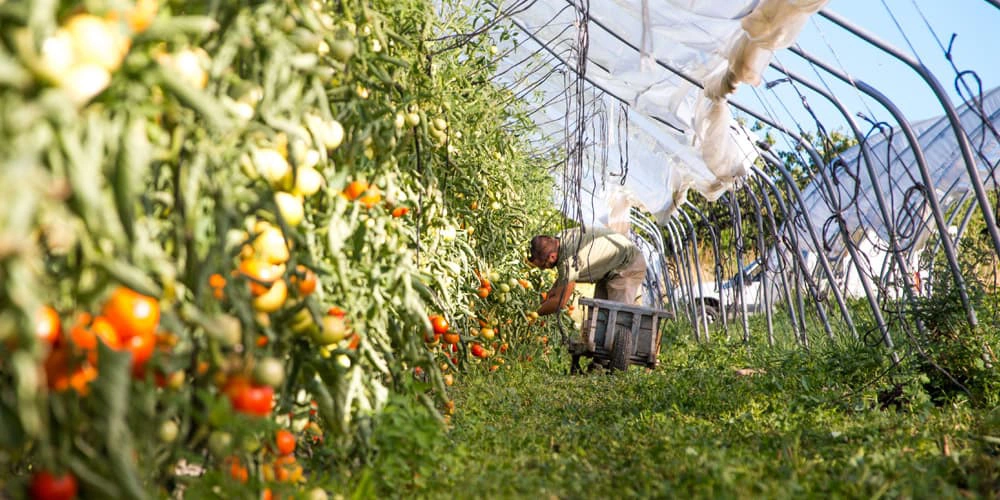
Isara takes a comprehensive approach to the study of food systems, examining them in relation to the needs and expectations of a region’s inhabitants in terms of food, the economy, the environment, and quality of life.
We focus in particular on the impact of food systems on the environment, but also on how they are integrated and their contribution to regional development.
Our work, based on real-life situations, aims to answer questions from economic and institutional actors, as well as citizens and consumers in general.
Our work is approached in an interdisciplinary manner. It brings together agronomists, microbiologists, and technologists who are interested in the production and processing of agricultural products. Economists and sociologists study the role of economic, political, and institutional actors in supporting the transition to sustainable food systems.
EXAMPLE OF RESEARCH WORK: SYAM
Food systems in the SyAM environment: innovation for fairer remuneration
Isara coordinates the SYAM research project, which aims to understand medium-sized food systems between short and long supply chains.
SYAMs differ from other food distribution channels in that various stakeholders (farmers’ collectives, vegetable processors, SMEs, wholesalers, catering companies, distributors, startups, local authorities) are committed to working together to build virtuous supply chain projects.
These projects are driven by the establishment of “win-win” agreements that enable stakeholders to create economic value and distribute it more evenly among themselves.
Babette: access to quality food for all
Babette is an action research project that aims to understand the difficulties families face in moving towards a high-quality diet and to test solutions that promote change in this direction. What makes Babette unique? It addresses the issue of food in its entirety: farming practices, the organization of processing and distribution, food purchasing, cooking and meals, the transmission of cooking knowledge, and education.